

Estimated reading time: 4 to 5 minutes
How RigCraftor rethought trailer access
In trucking, some risks do not come from a major accident. They come from a repeated motion, one that becomes normalized and almost invisible: climbing onto a trailer, then climbing back down, again and again.
One foot on the tire.
One hand on a poorly positioned support point.
A jump “out of habit.”
A wet, icy, muddy, or dusty surface.

This is exactly the kind of field reality that led to the creation of the Trucker’s Step at RigCraftor. The starting point was not “let’s invent a ladder,” but rather this question: how can we provide simple, fast, and safe access to trailers that are too often accessed in improvised ways?
The real problem: improvised access
In flatbed and enclosed trailer operations, climbing on and off the deck is part of everyday work. Yet access is often achieved using tires, axles, bumpers, or small steps that are not very ergonomic. Over time, these repeated movements create significant stress on the knees, ankles, and lower back.
It was this normalization of risk that became the starting point for the development of the Trucker’s Step.
RigCraftor identified several practical constraints:
-
variable trailer heights
-
lack of three points of contact
-
slippery surfaces in real-world conditions
-
repeated jumps causing microtrauma
In other words, the problem was not just accessing the trailer. The problem was the lack of stable, ergonomic access.
The first prototypes
The first design question was simple:
How can we create a ladder that is easy to deploy, stable, and compatible with different types of trailers?

The first prototypes made it possible to test:
-
step width
-
support angle
-
attachment method
-
load resistance
As is often the case in product innovation, the first versions revealed their limits in real-world conditions. Some lacked stability. Others added too much weight or made installation more complex. The goal was never to make the operation more complicated, but rather to remove friction from daily work.
The optimization phase
Once the concept was validated, RigCraftor entered a highly practical optimization phase. The priorities were clear:
-
ensure maximum lateral stability
-
provide effective non-slip surfaces
-
allow fast installation
-
offer compatibility with different trailer formats
Tests were carried out in realistic conditions: rain, snow, and uneven ground. User feedback helped refine:
-
the anchoring system
-
structural rigidity
-
step height
-
overall product ergonomics
The objective remained the same from beginning to end: eliminate improvisation.
What the Trucker’s Step had to achieve
Access equipment must inspire confidence from the very first use. That is why validations focused on:
-
load capacity
-
stability under movement
-
material durability
-
wear resistance

The tests confirmed that structured access:
-
reduces jumping
-
improves balance
-
decreases mechanical stress on the joints
That is where the Trucker’s Step truly makes sense: it is not an accessory added as an afterthought. It is a direct response to a very real operational risk.
The final product
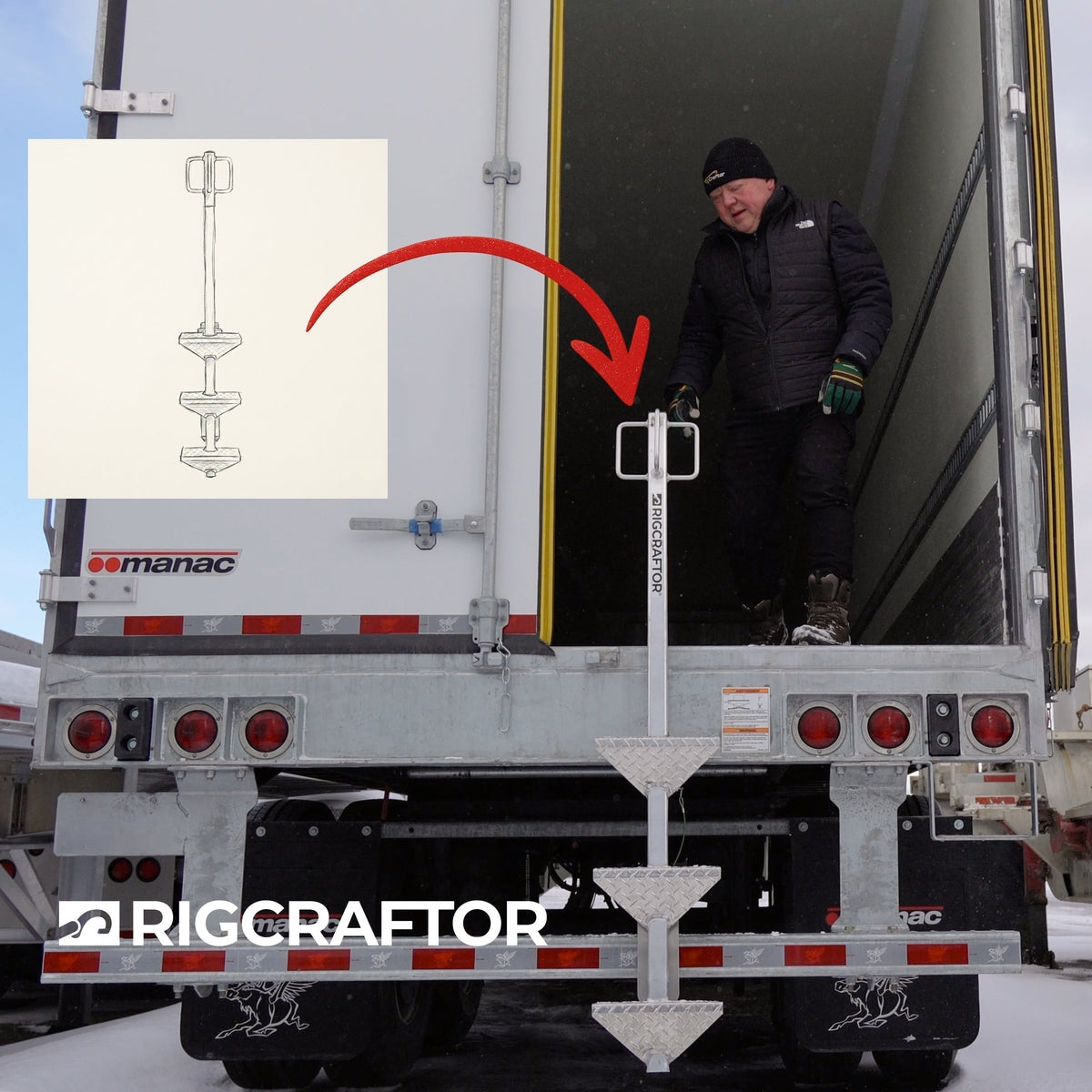
Today, the Trucker’s Step 3-Step is designed to provide:
-
3 points of contact
-
solid, non-slip steps
-
a 100% aluminum structure
-
a 450 lb capacity
-
simple and safe access for climbing on and off trailers
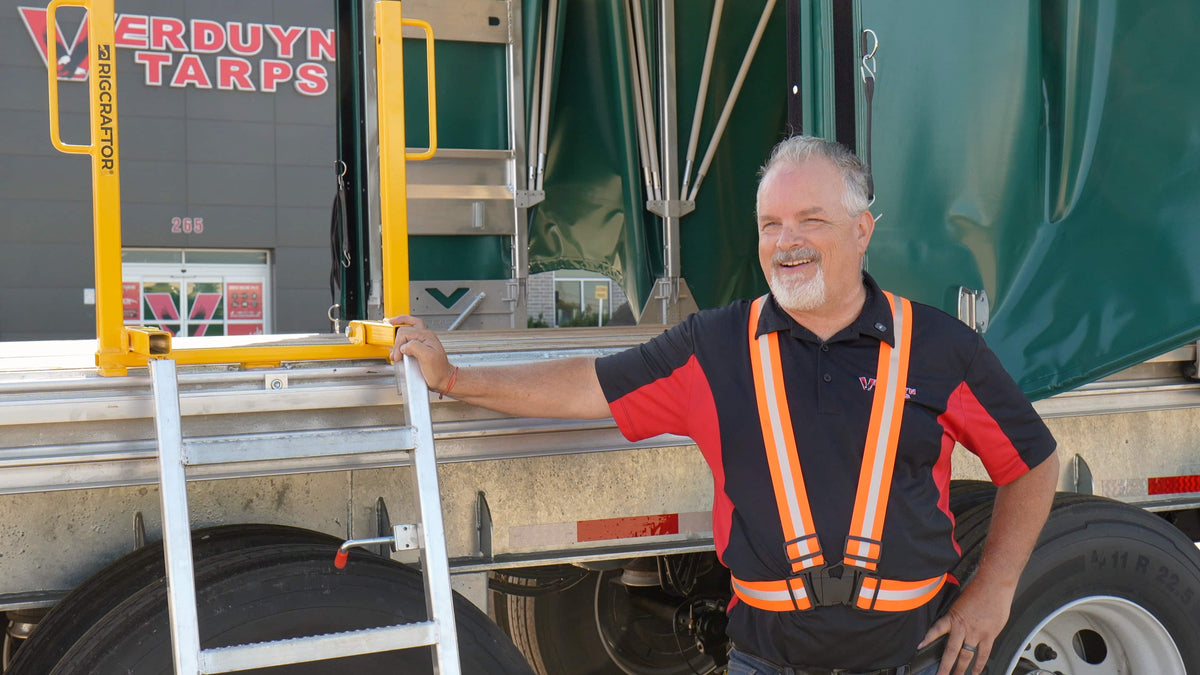
In RigCraftor’s product documentation, it is also described as compatible with curtain-side trailers and flatbeds, with a format designed to remain lightweight, rugged, and practical for everyday use.
Why this product fits RigCraftor
The Trucker’s Step perfectly reflects RigCraftor’s development approach: start with a field-level pain point, observe a risk that has become “normal,” then design a simple, rugged, and useful solution.

The goal is not only to prevent a fall. The goal is also to reduce fatigue, lighten the physical effort, and make the job more sustainable over time.
In summary
The development of the Trucker’s Step comes down to one key idea:
A routine movement can become a costly risk if it is not properly structured.
RigCraftor therefore designed a solution to turn improvised access into safe access.
Not to make a trailer look better.
Not to add one more product to the catalog.
But to respond to a very real field reality.
The Trucker’s Step was not born from an abstract idea.
It was born from a clear need: to climb on and off a truck safely, without depending on luck, habit, or brute strength.


Share: