/// THE MACHINE ISN'T THE ONLY THING THAT CAN HURT YOU.
The serious injuries on a mine site don't only come from operating heavy equipment. They come from everything around it — the climb up to a cab three meters off the ground, the loads strapped down for the haul across site, the manual handling that fills every maintenance shift. Repeated every day, in dust, mud, and cold, until something gives. Most of it is regulated. All of it is preventable.
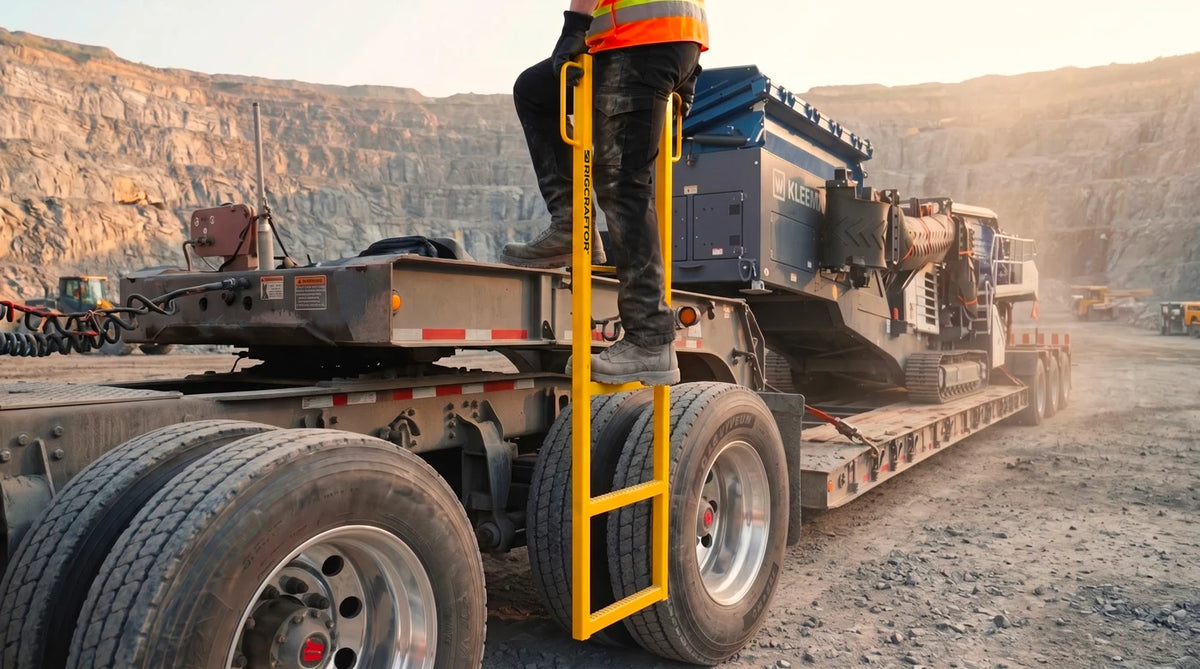
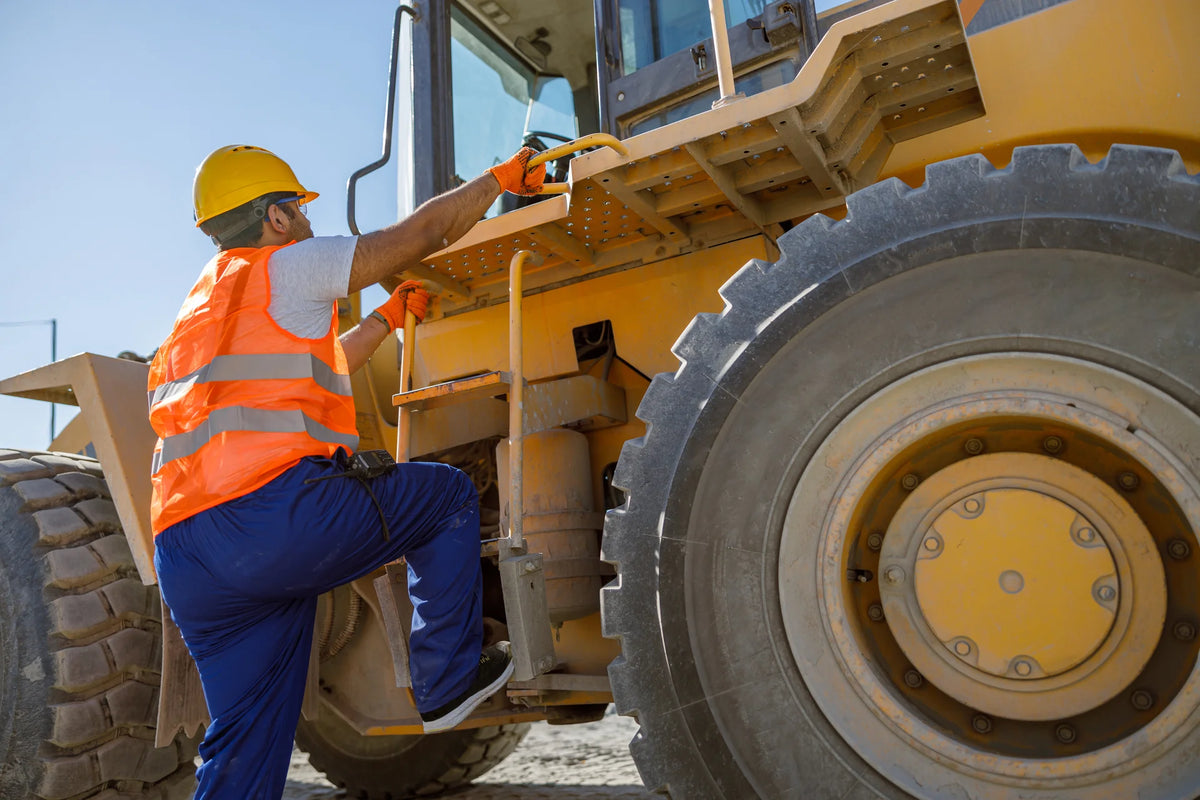
GETTING ONTO A HAUL TRUCK IS A CLIMB OF SEVERAL METERS — DONE DOZENS OF TIMES A SHIFT.
Falls while mounting and dismounting mobile equipment are among the most serious injuries in mining. Operators and mechanics climb onto haul trucks, dozers, and loaders many times a day, often on worn steps and poor footing. Regulators require three points of contact for a reason — but the rule only works if the access does too.
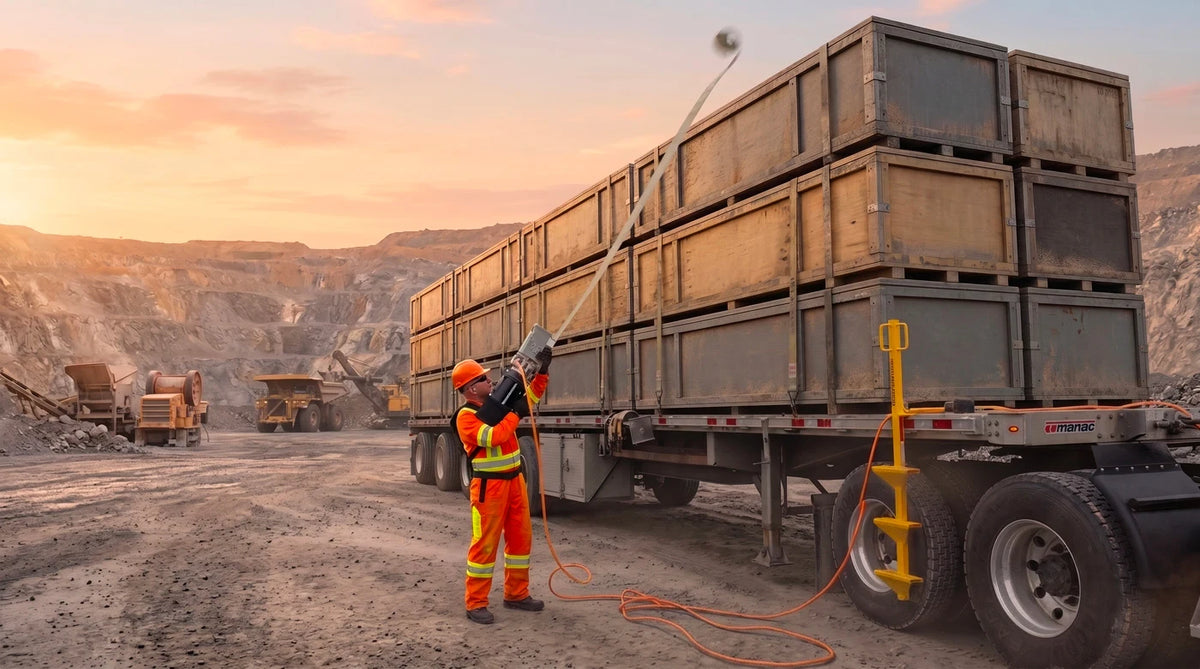
STRAPPING DOWN EQUIPMENT AND OVERSIZED LOADS BY HAND IS SLOW — AND HARD ON THE BODY.
Parts, supplies, and machinery move across a mine site and out to the highway on flatbeds, lowboys, and floats. Throwing straps over tall, heavy loads by hand is a leading driver of shoulder injuries in securement work — and every minute spent wrestling a strap is a minute the equipment isn't moving.
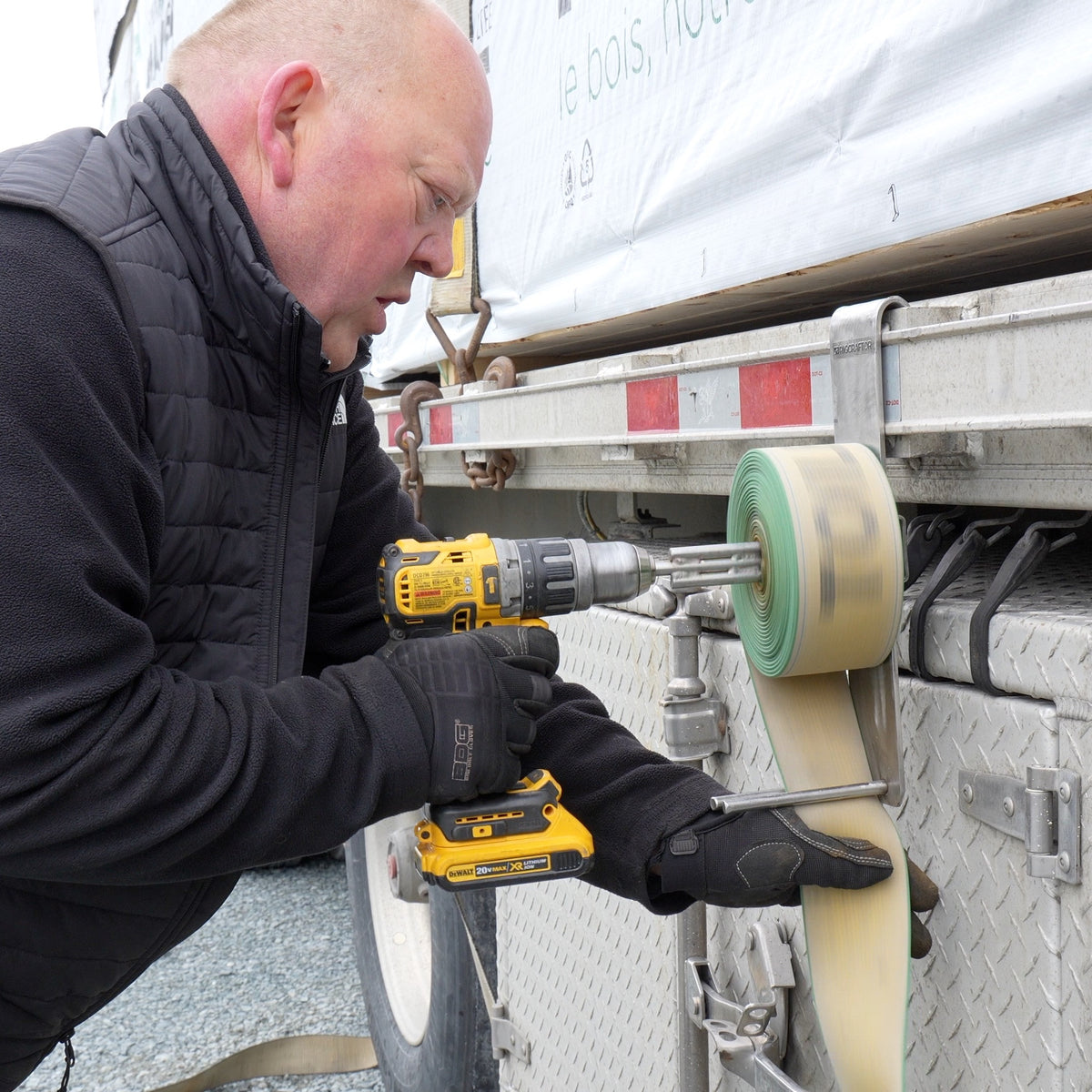
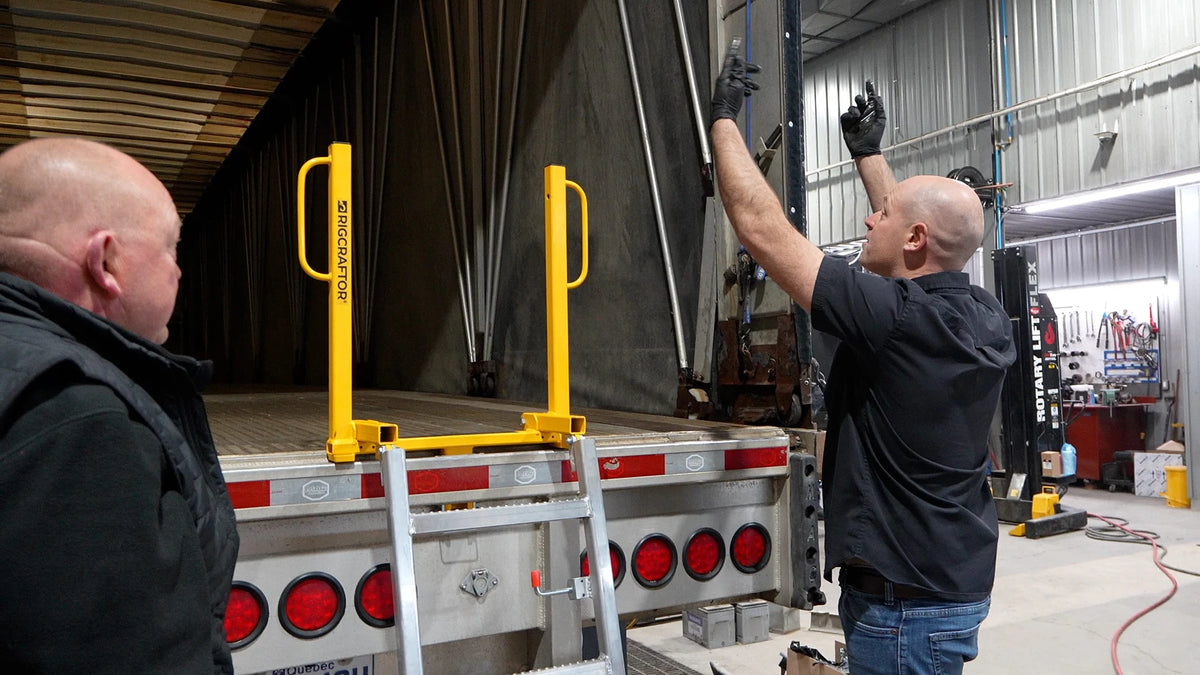
THE SMALL TASKS DON'T LOOK LIKE INJURIES. OVER A CAREER, THEY ADD UP LIKE ONE.
Winding straps, hooking and dragging gear, clearing decks and platforms — the routine handling that fills every maintenance shift looks harmless. But the accumulation of repeated, awkward motions is what grinds bodies down and quietly stretches every job. The right tool turns each one into seconds instead of strain.