/// THE FALL FROM HEIGHT GETS THE HEADLINES. THE TRUCK AND THE LOAD GET THE REST.
The most dangerous moments on a construction site aren't only the ones at height. They're in the everyday work around the trucks and equipment — climbing onto a flatbed to strap a load, getting up to a machine, hauling materials in and out. Roughly 75% of struck-by deaths involve heavy equipment like trucks. The rest is the slow accumulation of climbs, throws, and lifts that wear a body down. Most of it is preventable.
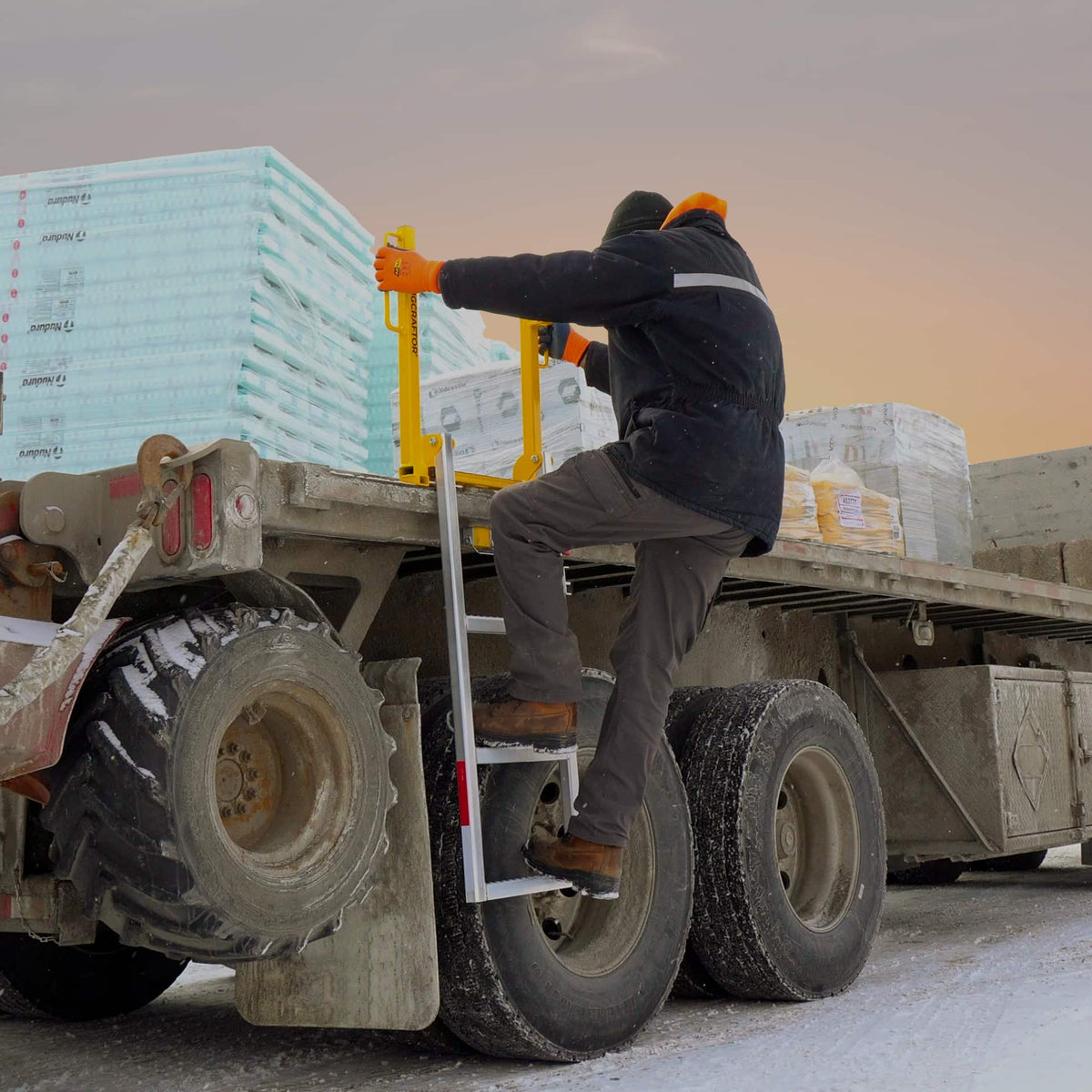
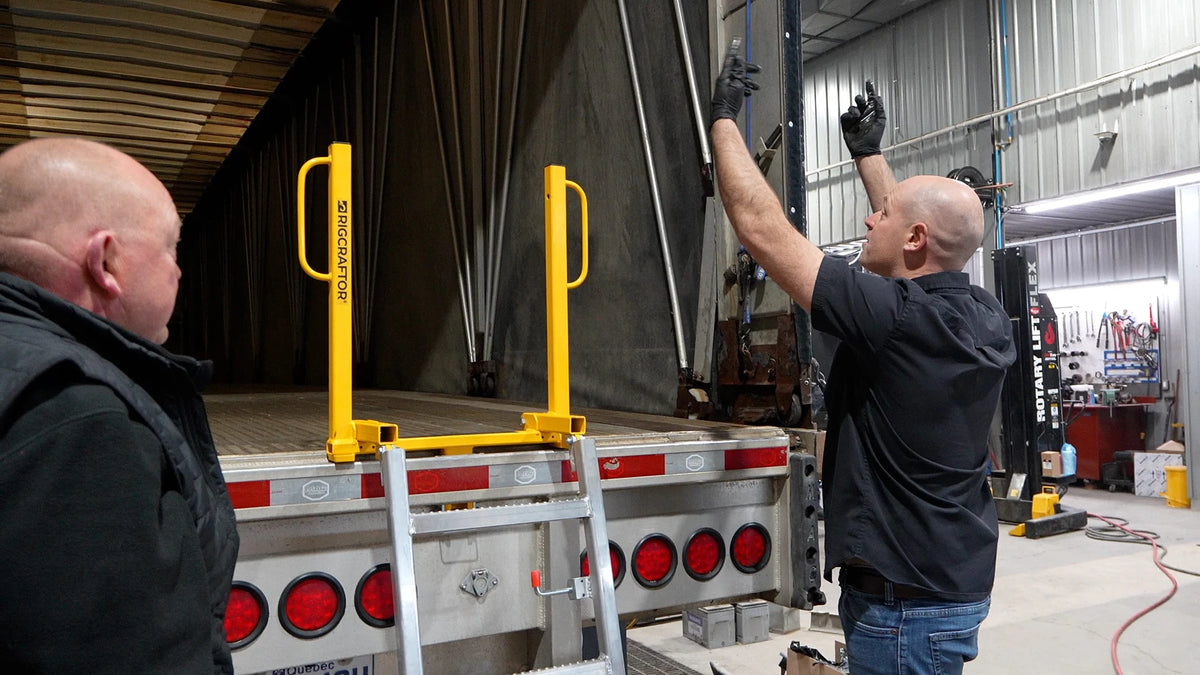
CLIMBING ONTO A FLATBED OR A MACHINE ON WORN STEPS AND BAD FOOTING IS A FALL WAITING TO HAPPEN.
On a busy site, crews climb onto trucks, trailers, and equipment all day — often using a tire, a frame edge, or whatever's there. Falls are the leading cause of death in construction, and access falls are a big share of them. Three points of contact is the rule for a reason — but it only works if the access does too.
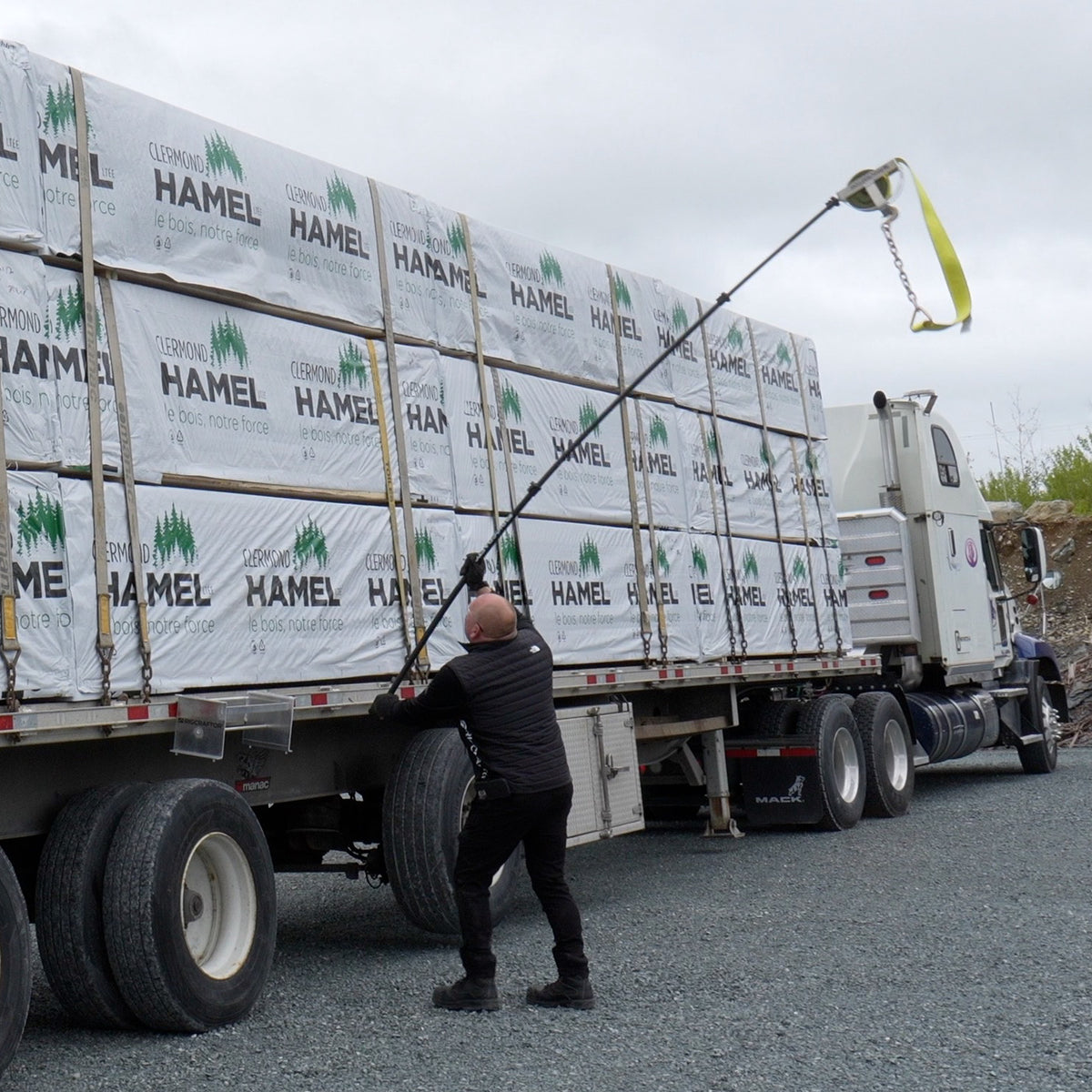
STRAPPING DOWN STEEL, LUMBER, AND EQUIPMENT BY HAND IS SLOW — AND HARD ON THE BODY.
Materials and machines move to and from site on flatbeds and trailers every day. Throwing tie-down straps over tall, heavy loads by hand is a leading driver of shoulder injuries — and every minute spent wrestling a strap is a minute the crew isn't building.
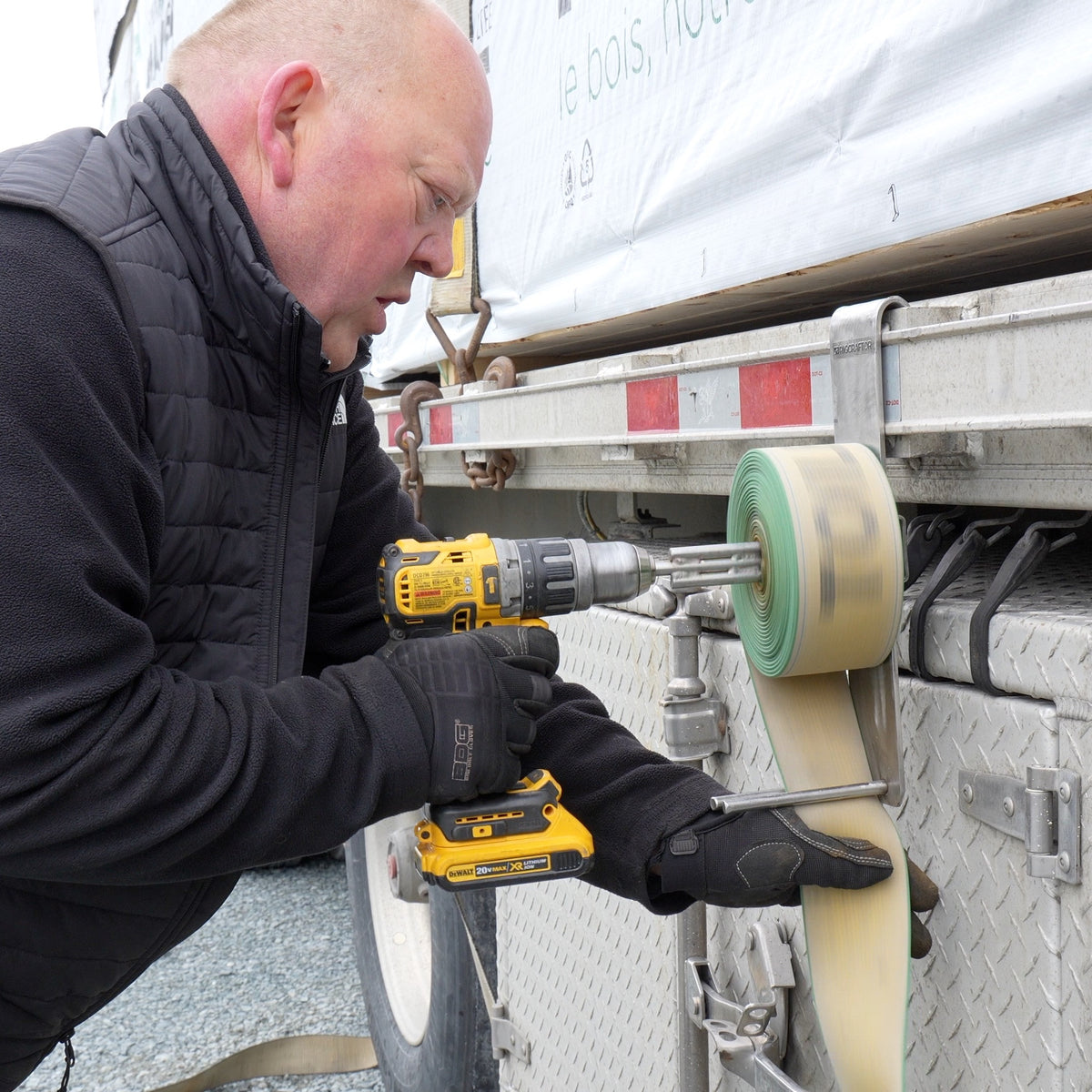
THE SMALL TASKS DON'T LOOK LIKE INJURIES. OVER A CAREER, THEY ADD UP LIKE ONE.
Winding straps, dragging hooks and gear, clearing decks and beds — the routine handling on every site looks harmless. But the accumulation of repeated, awkward motions is what grinds bodies down and quietly slows the job. The right tool turns each one into seconds instead of strain.