/// IT'S NOT AN ACCIDENT. IT'S AN ACCUMULATION.
Long-haul injuries don't come from the driving. They come from the work around the truck — the same climb, the same throw, the same reach, done thousands of times until something gives. None of it is dramatic. All of it is preventable. And every minute it costs adds up across a fleet.
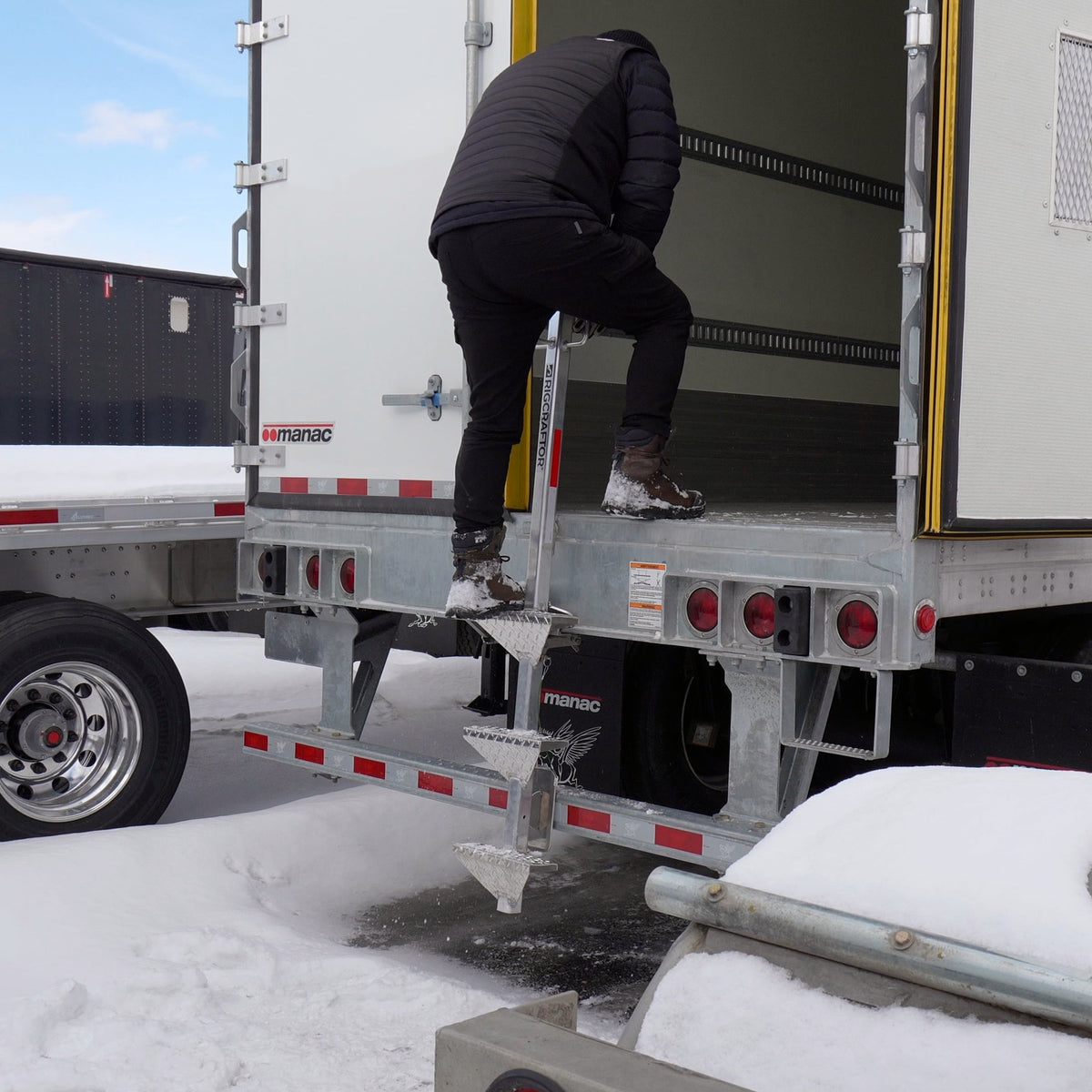
CLIMBING ONTO A FLATBED ON TIRE RIMS AND MUDFLAPS ISN'T ACCESS. IT'S A FALL WAITING FOR A BAD DAY.
Drivers climb onto decks four feet up using whatever the truck offers — a tire, a strap hook, the edge of the frame. Every climb is a fall risk, and over a career it's the knees, the back, and the shoulders that pay. Without a real way up and down, it's slower too — every load starts and ends with a scramble.
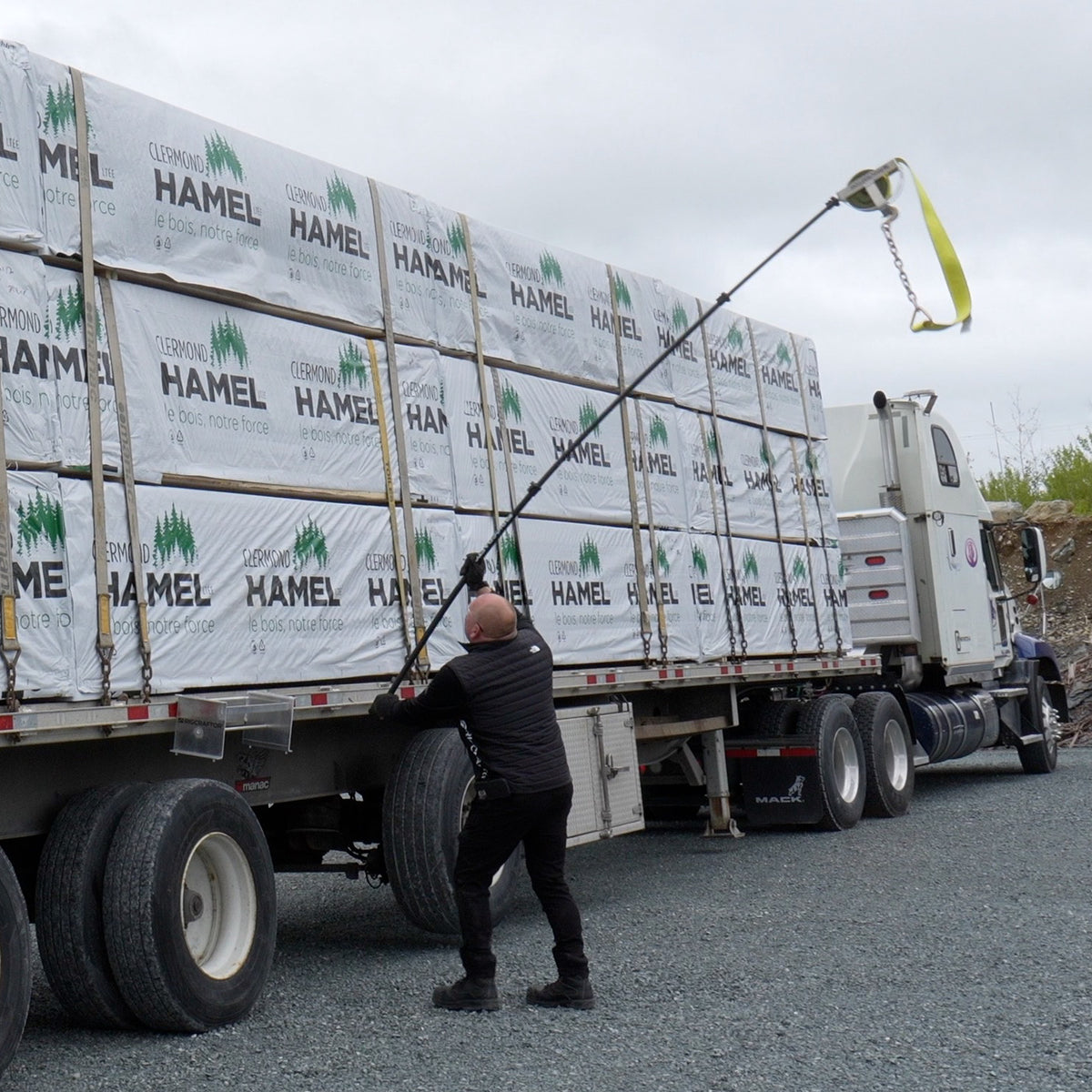
THROWING STRAPS OVER A LOAD BY HAND WRECKS SHOULDERS — AND BURNS DAYLIGHT AT EVERY STOP.
Tossing tie-downs over a tall load is the most punishing motion in the job. Load after load, it's the leading driver of shoulder and rotator-cuff injuries in flatbed work. It's also slow and miss-prone — every failed throw is another rep, another minute, another stop running long.
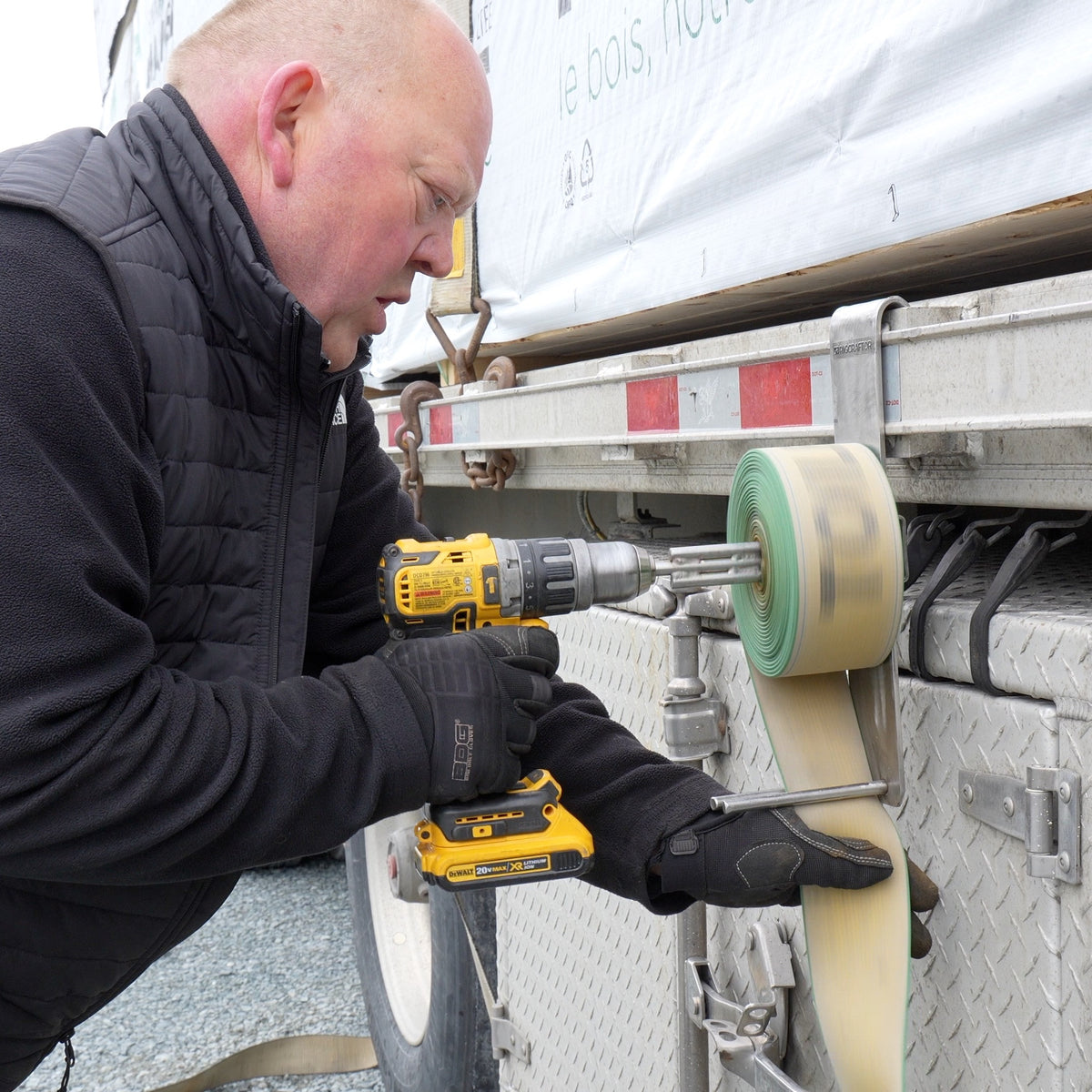
THE SMALL JOBS DON'T LOOK LIKE INJURIES. THEY ADD UP LIKE ONE.
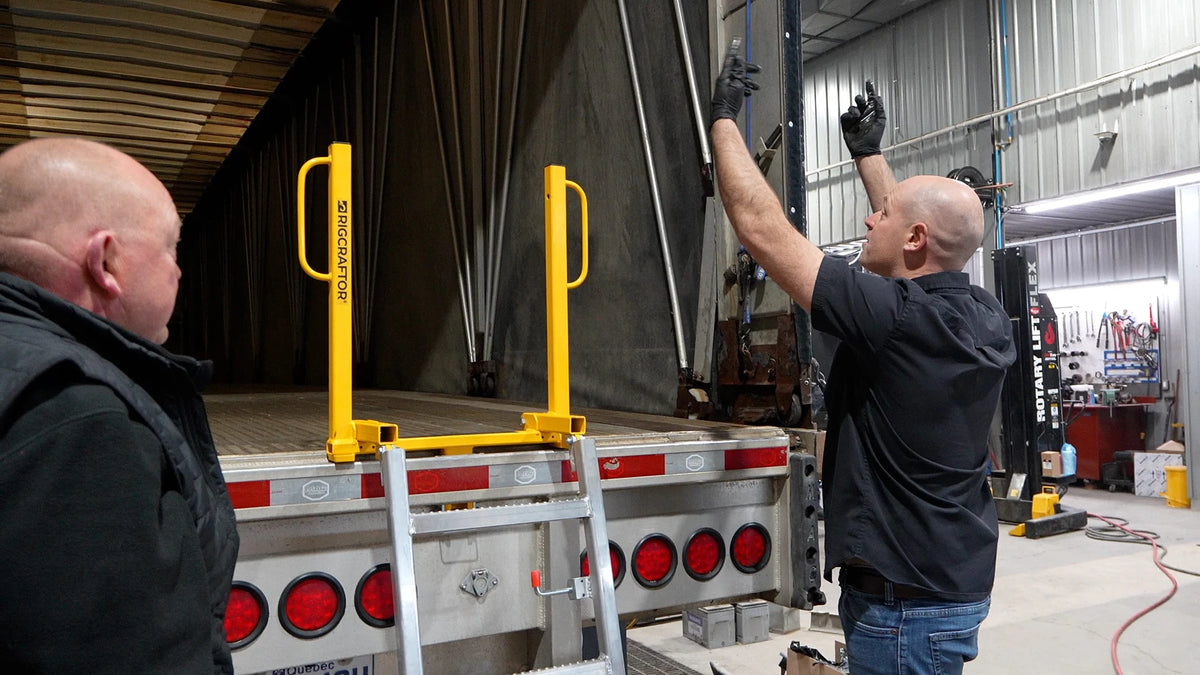
Winding straps by hand, sweeping out a trailer, dragging hooks and gear across the deck — none of it looks dangerous. But it's the accumulation of small, awkward, repeated handling that grinds a body down and quietly stretches every turnaround. The right tool turns each one into seconds instead of strain.