

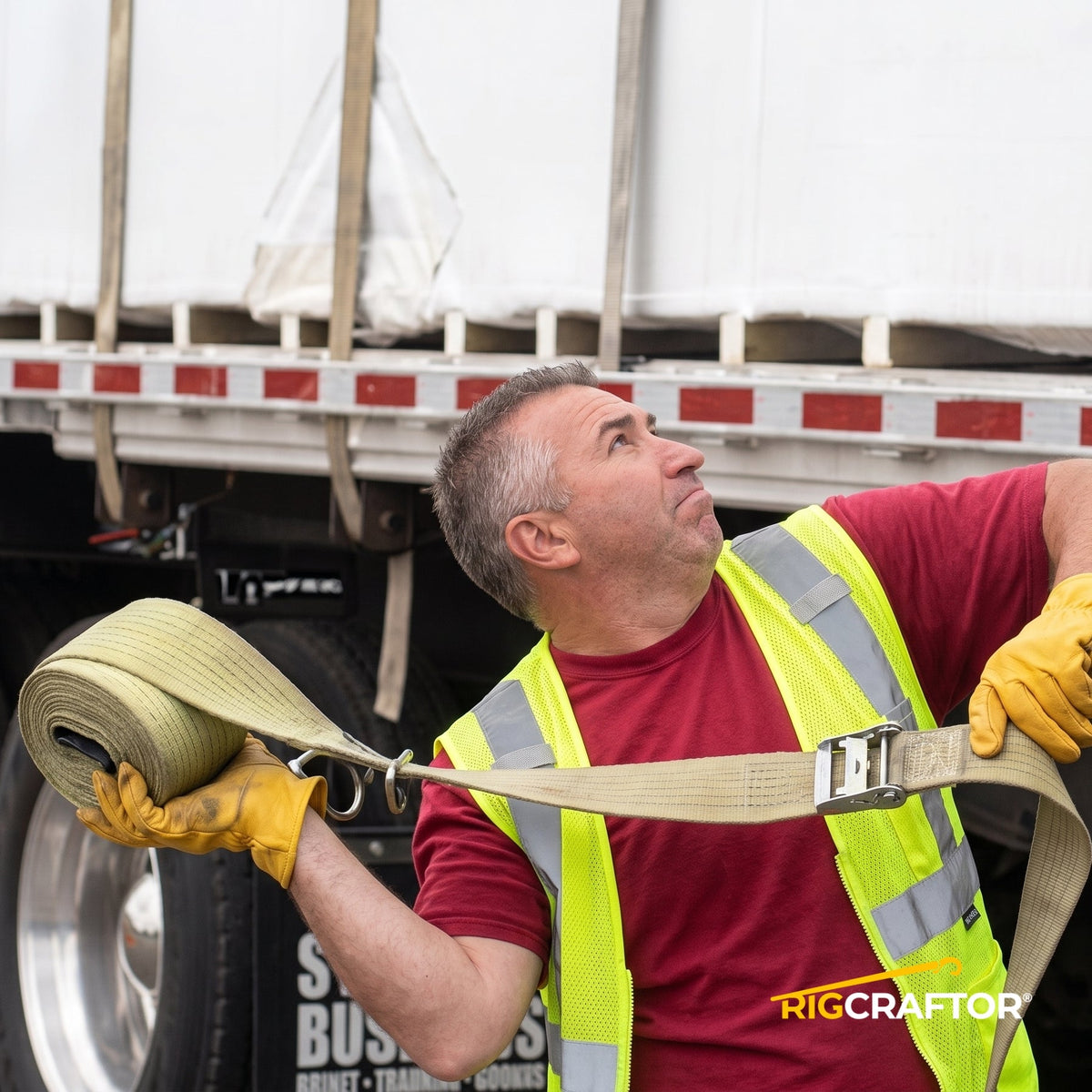
It doesn't start with a dramatic accident. No crash, no fall. Just a low-grade discomfort that creeps in after long days, then some stiffness in the morning, until one day raising your arm becomes a real effort.
That's how trucker's shoulder develops. And that's exactly why it's so dangerous: by the time most drivers take it seriously, the damage is already done.
The number that should make everyone stop: studies estimate that up to 93% of professional truck drivers suffer from musculoskeletal pain. That's not a fringe statistic — it's nearly everyone in the industry.
Why Is the Shoulder So Vulnerable in This Profession?
People often think of truck driving as sedentary work. In reality, a driver's shoulders take a serious beating — and often in the least favorable positions.
Here are the main culprits:
-
Throwing straps across the trailer, dozens of times a day. The throwing motion forces the rotator cuff into an unnatural position — especially when the strap is heavy or twisted.
-
Cranking landing gear handles. Repeated rotation under load is one of the most common causes of shoulder tendinitis in drivers.
-
Continuous cab vibration transmitted through the seat to the spine and joints during long hours behind the wheel.
-
Holding the steering wheel in a static position for extended periods, especially with a grip that's too tight.
From Discomfort to Chronic Injury: How It Progresses
Most shoulder injuries in truckers don't happen all at once. They follow a predictable pattern:
-
Phase 1 — Muscle fatigue: mild pain after work that disappears by morning.
-
Phase 2 — Inflammation: pain persists during work and starts affecting sleep quality.
-
Phase 3 — Tendinopathy or tear: pain is present at rest, some movements become impossible.
The problem is that most drivers wait until Phase 3 before seeing a doctor. At that point, recovery takes months — sometimes with surgery. And for some, it means the premature end of a career.
5 Habits to Protect Your Shoulders Long-Term
-
Warm up before you start. 5 minutes of shoulder rotations and stretches before the first strap of the day significantly reduces the risk of micro-tears.
-
Switch sides. Alternating arms during repetitive tasks distributes the muscle load more evenly.
-
Loosen your grip on the wheel. A too-tight grip creates continuous tension in the forearms that travels up to the shoulder. Holding the wheel with your fingers rather than your palm helps release that tension.
-
Stretch at every stop. Even 3-4 minutes of movement is enough to restore circulation and reduce tension buildup.
-
Reduce the effort in strapping. That's where the right tools make all the difference.
Strapping: Where Shoulders Pay the Highest Price
Throwing a strap manually across a trailer forces the shoulder through its maximum range of motion — the highest-risk position for the rotator cuff. Repeated dozens of times a day, over years, it's a recipe for premature wear.

Twisted straps are another common problem on flatbeds. Retrieving or straightening them by hand often involves sudden, uncontrolled movements — exactly what the shoulder can't afford.
RigCraftor Products Designed to Protect Your Shoulders
At RigCraftor, every strapping tool starts with the same question: how do we take load off the body while making the job faster and more precise?
-
Pneumatic Strap Launcher — Designed to eliminate the manual throwing motion entirely. Powered by the truck's air system, it propels the strap in a controlled, precise arc — eliminating twists and drastically reducing the physical effort required. The result: less fatigue, fewer shoulder injuries, more productivity.
-
Telescoping Carbon Handle & Bucket (5 to 12 ft) — Ultra-lightweight carbon fiber (1.7 lb). Lets you launch the strap first without reaching into an extreme arm position. Compatible with 2", 3", and 4" straps.
-
Strap Bar (7th Generation) — Hardened carbon steel, deep anti-slip grooves, retention washer. Reduces the effort needed to tighten straps, directly relieving shoulder and wrist strain.
-
Strap Baskets + Winding Kit — Organized strapping gear means fewer unnecessary movements. Well-stored straps mean less time retrieving them and fewer pointless repetitive motions.
Extending a Career Is a Decision Made Before the Pain Sets In
Trucker's shoulder is not inevitable. It's the result of repeated movements performed with too little protection, too much effort, and too few purpose-built tools.
The good news: the solutions exist. And they don't ask you to change the way you work — just to use better tools to do the exact same job.
Stay on the road longer. That's the RigCraftor mission.
→ Discover the RigCraftor Pneumatic Strap Launcher
→ Explore All RigCraftor Strapping Tools
Sources
- WorkSafePT — Keeping Truck Drivers on the Road: Effective Strategies for Preventing and Treating Musculoskeletal Injuries
- ISHN — Ergonomic Support for Truck Fleets: Reducing Injuries and Boosting Driver Performance
- PMC / NIH — Musculoskeletal disorders among truck drivers (2024)


Share: