

You Climb Up and Down from Your Truck 10 Times a Day. How Often Do You Actually Use the 3-Point Contact Rule?
Some habits become so automatic we stop seeing them. Climbing into the cab. Stepping down onto the dock. Hopping up onto the trailer. For most truck drivers, these movements are second nature — and that's exactly where the danger hides.
Industry insurance data confirms it: falls from vehicles cause injuries nearly 25% more severe than other types of workplace accidents. And the number one cause? Failing to use the 3-point contact rule.

What Is the 3-Point Contact Rule?
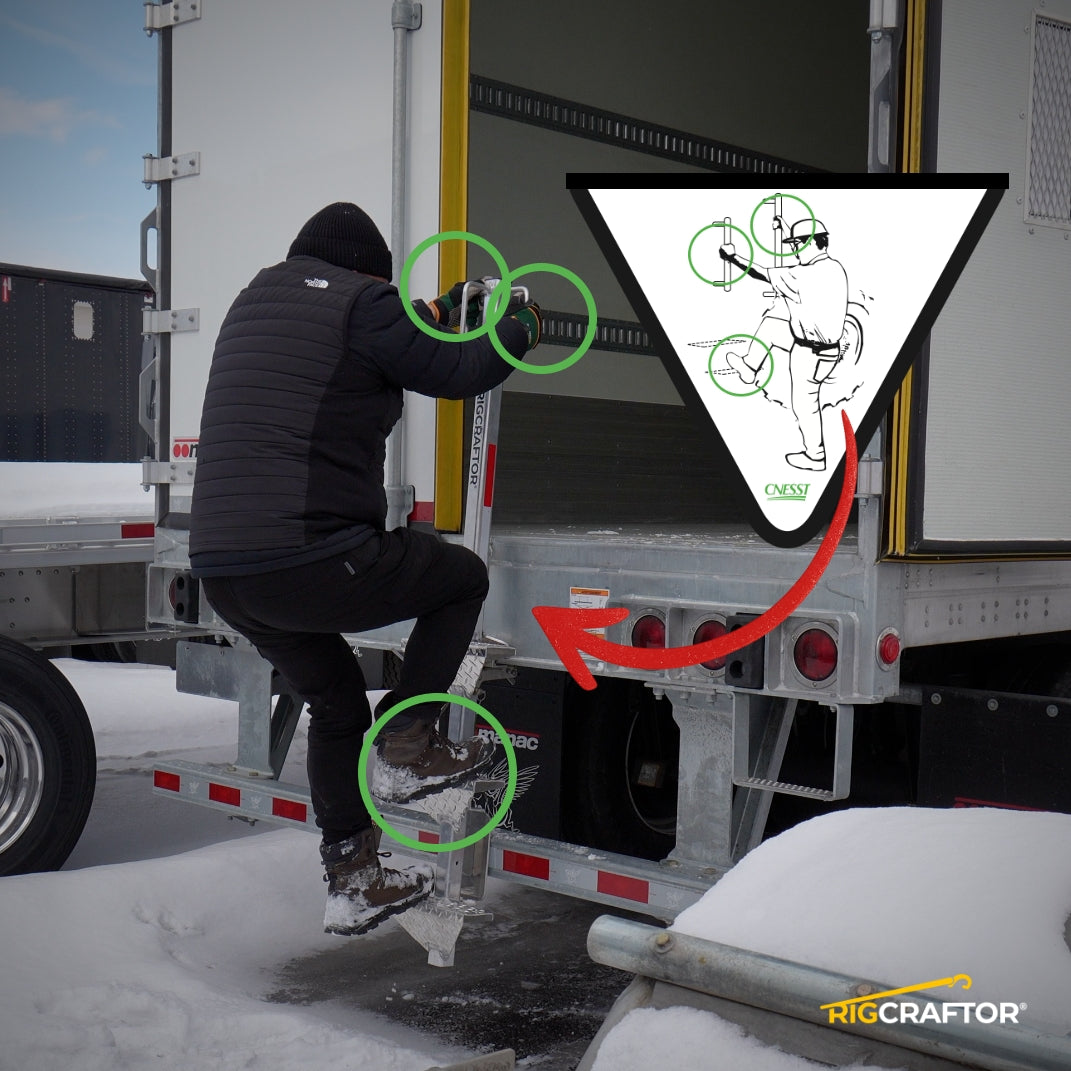
The rule is straightforward: whenever you're getting into or out of a vehicle, three of your four limbs must be in contact with the truck at all times. That means two hands and one foot, or two feet and one hand.
This isn't a suggestion. In the United States, the Federal Motor Carrier Safety Administration (FMCSA) mandates it in its regulations. In Canada, occupational health and safety standards for employers echo the same requirement.

Why Is It So Hard to Follow?
Because old habits die hard. Falls from trucks most often happen in two situations:
-
Holding something in your hand (coffee, phone, delivery tablet) while getting down.
-
Jumping from the cab or deck instead of facing the vehicle and stepping down.
Add weather conditions to the mix — snow, ice, mud, morning dew — and the risk multiplies fast. Especially when steps and grab bars aren't designed to drain properly or provide real grip.
The Most Common — and Most Costly — Injuries
More than half of slip-and-fall injuries in the trucking industry are sprains and strains that occur during entry or exit from the vehicle. The most affected areas: ankles, knees, and lower back.
What makes these accidents especially damaging is their career impact. A serious knee sprain or ankle fracture can sideline a driver for weeks — or months. For owner-operators, that's direct revenue loss. For fleets, it means increased insurance premiums and expensive replacement logistics.
4 Concrete Habits to Make It Second Nature
-
Always face the truck when getting down. Never step backwards off the vehicle.
-
Free your hands before stepping down. Coffee, phone, logbook — set it down first.
-
Clear the steps in winter. Brush off snow, ice, and mud before climbing.
-
Never jump. Even when you're in a hurry. Especially when you're in a hurry.
Trailer Access: Often the Weakest Link
The 3-point contact rule can only be applied when the access point is properly designed for it. Climbing via the tire, grabbing the chassis, improvising with whatever's available — that's what happens when the equipment doesn't fit the task. It's not negligence. It's adapting to a poorly designed tool.
That's exactly the problem RigCraftor set out to solve with its complete line of truck ladders and steps. Every product is built with 3-point support at its core — not as a bonus feature, but as a baseline requirement.
RigCraftor Solutions for Safe Trailer Access
Depending on the type of trailer you operate, here are the products designed to eliminate improvised access:
-
Trucker's Step — 100% aluminum, non-slip steps, guaranteed 3-point support, compatible with all trailer types. Ideal for flatbeds and low-deck trailers.
-
Trucker's Step Drybox — Designed specifically for dry van trailers. Fast attachment, easy removal, patented. Safe access for frequent delivery operations.
-
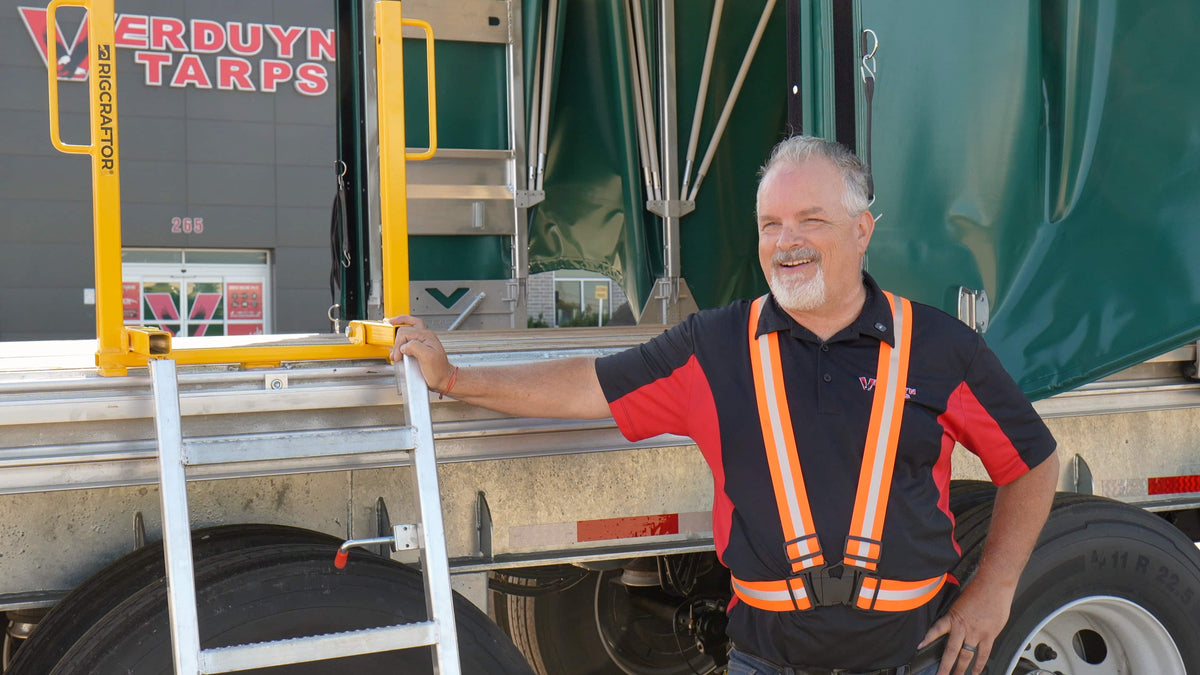
Curtain-Side Trailer Foldable Ladder — 3 steps, protects the curtain rail, folds flat during transport. One-of-a-kind on the market.
-
Pull-Out Steps — Permanent installation, fast deployment, ideal for multi-stop daily delivery operations.
-
Simple Ladder for Tank Truck — Unique on the market. Lightweight and ergonomic, provides safe access for tanker inspection, cleaning, and maintenance.
Safety Starts Before You Turn the Key
The 3-point contact rule costs nothing to apply. It takes 3 extra seconds on every entry and exit. And it can prevent weeks off the road, a shortened career, or worse.
But for the rule to actually be applied, the equipment has to make it possible. Poorly designed access forces bad habits. Well-designed access makes the right move the natural one.
That's what RigCraftor builds, one product at a time.
→ View All RigCraftor Access Products
Sources
- Accident Fund — Be Safe When Entering and Exiting Trucks with Three Points of Contact
- OSHA Safety Manuals — The Three-Point Rule: You Don't Have to Fall Off a Truck
- FMCSA — Federal Motor Carrier Safety Regulations


Share: