

Estimated reading time: 3 to 4 minutes
How field-proven solutions can strengthen military logistics
In defense operations, logistical performance does not depend only on major systems. It also depends on everyday actions: quickly accessing a vehicle, securing a load without wasting time, and handling equipment without adding unnecessary risk.
That is where applying industrial solutions to defense becomes relevant.
At RigCraftor, the approach is simple: adapt tools already proven in the field to meet military needs, where every movement counts, every access point carries risk, and every inefficiency slows the mission.
This approach directly reflects the company’s philosophy: start with real field friction points to improve safety, efficiency, and operational flow.
Why industry can inspire defense
In industrial transportation, certain constraints are already well known:
-
frequent access to trailers and vehicles
-
load securement
-
handling under pressure
-
the need for speed without sacrificing safety
RigCraftor documents show that, in demanding environments, “last meter” tools are used precisely to reduce fatigue, limit safety incidents, and improve operational throughput, while reducing dependence on brute strength.
This is the approach that can be transferred to the defense sector:
Take simple, rugged, proven solutions and apply them to critical operations.
Defense logistics needs: more safety, more speed
The defense context comes with high demands. Logistics operations must be fast, reliable, and safe. Yet several friction points remain very concrete:
-
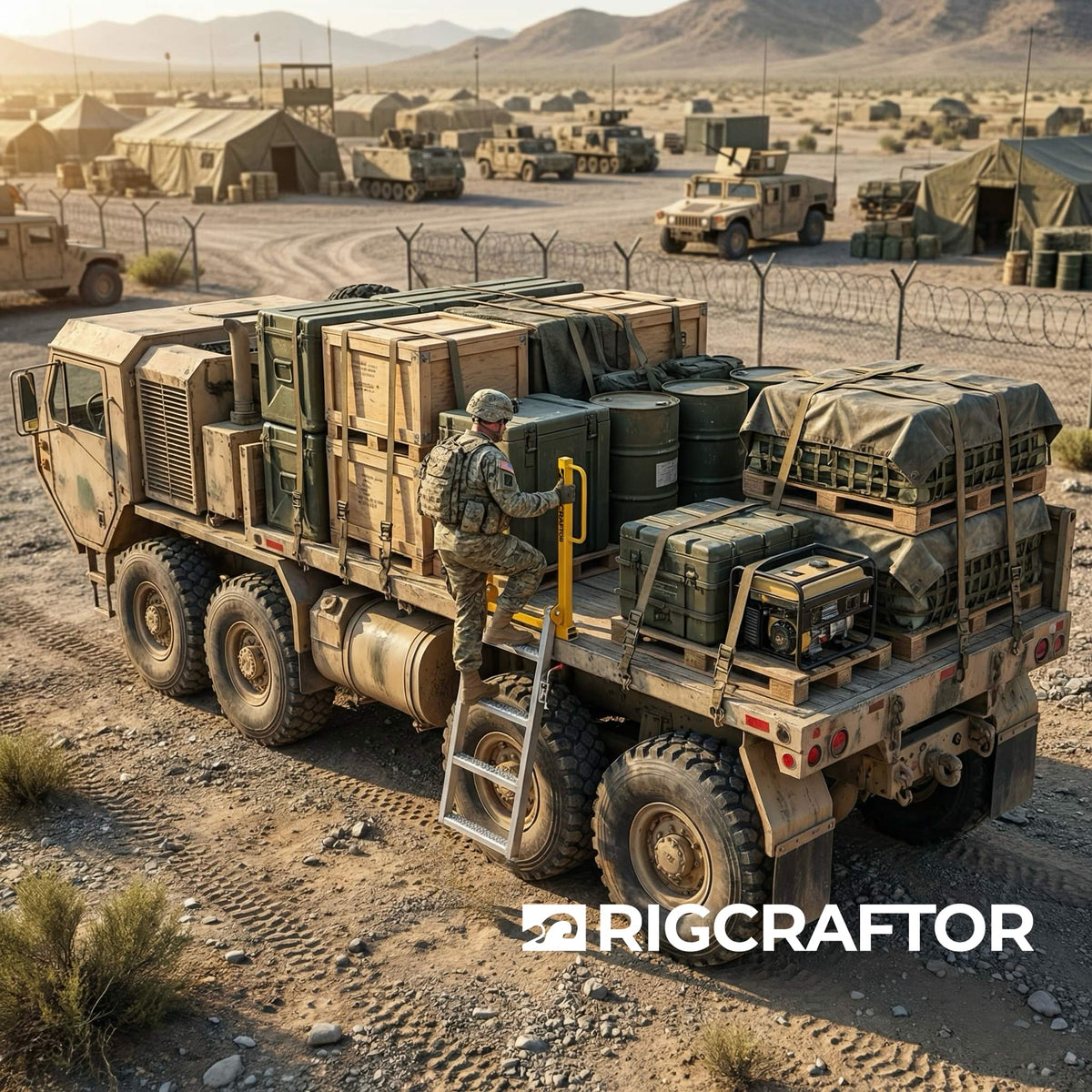
climbing into a vehicle or onto a trailer without a stable access point
-
securing equipment quickly
-
handling loads under time pressure
-
reducing errors and unnecessary movements

In its industry documentation, RigCraftor explains that “last meter” risk management is critical when equipment, materials, or machinery must be delivered to the right place, at the right time, without delay or damage.
The stated objective is clear: reduce risks related to transport and handling, accelerate response, and improve logistical performance.
Which solutions can apply to defense?
The proposed approach is based on product categories that are already consistent with this type of environment.
Ladders and access solutions
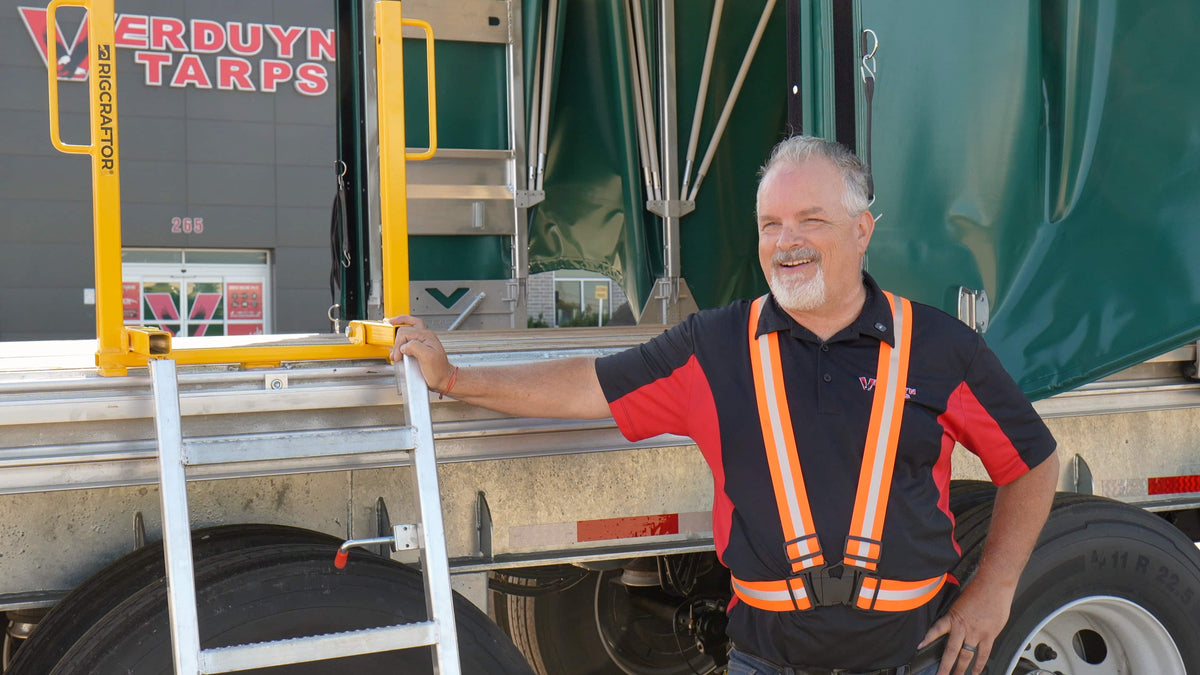
Ladders help secure access to vehicles and trailers. RigCraftor highlights several access solutions with non-slip steps, three points of contact, and rugged structures to reduce risks related to repeated climbing up and down.

Manual and pneumatic strap launchers
For load securement, strap launchers are designed to reduce the physical effort required to throw and position straps over loads, while making the movement faster and more precise. RigCraftor documentation directly connects these tools to reducing shoulder injuries and improving handling efficiency.

Tightening bars and rugged equipment
The bars are designed to secure tightening, improve grip, and prevent slipping during load securement. The objective is the same: more control, less risk, and less unnecessary effort.

An adaptation approach, not a simple transfer
The value of applying industrial solutions to defense does not come only from the existing products. It also comes from the method.
RigCraftor emphasizes that innovation does not begin in the workshop, but by listening to a real problem. Each solution starts with a challenge expressed in the field, then goes through design, testing, validation, and continuous improvement.
That is exactly what makes the approach relevant for defense:
-
field analysis
-
identification of friction points
-
solution adaptation
-
operational integration
-
continuous improvement
In other words, the goal is not simply to bring an industrial product into a military context.
The goal is to co-develop a response adapted to a demanding operational reality.
In summary
Applying industrial solutions to defense is based on one key idea:
Some of the best logistical improvements come from simple, rugged solutions that have already been validated in the field.
By adapting tools such as access ladders, strap launchers, and tightening bars to military needs, it becomes possible to:
-
reduce transport and handling risks
-
accelerate certain operations
-
improve team safety
-
strengthen logistical flow
When the mission depends on execution speed and field reliability, every operational gain matters.


Share: