

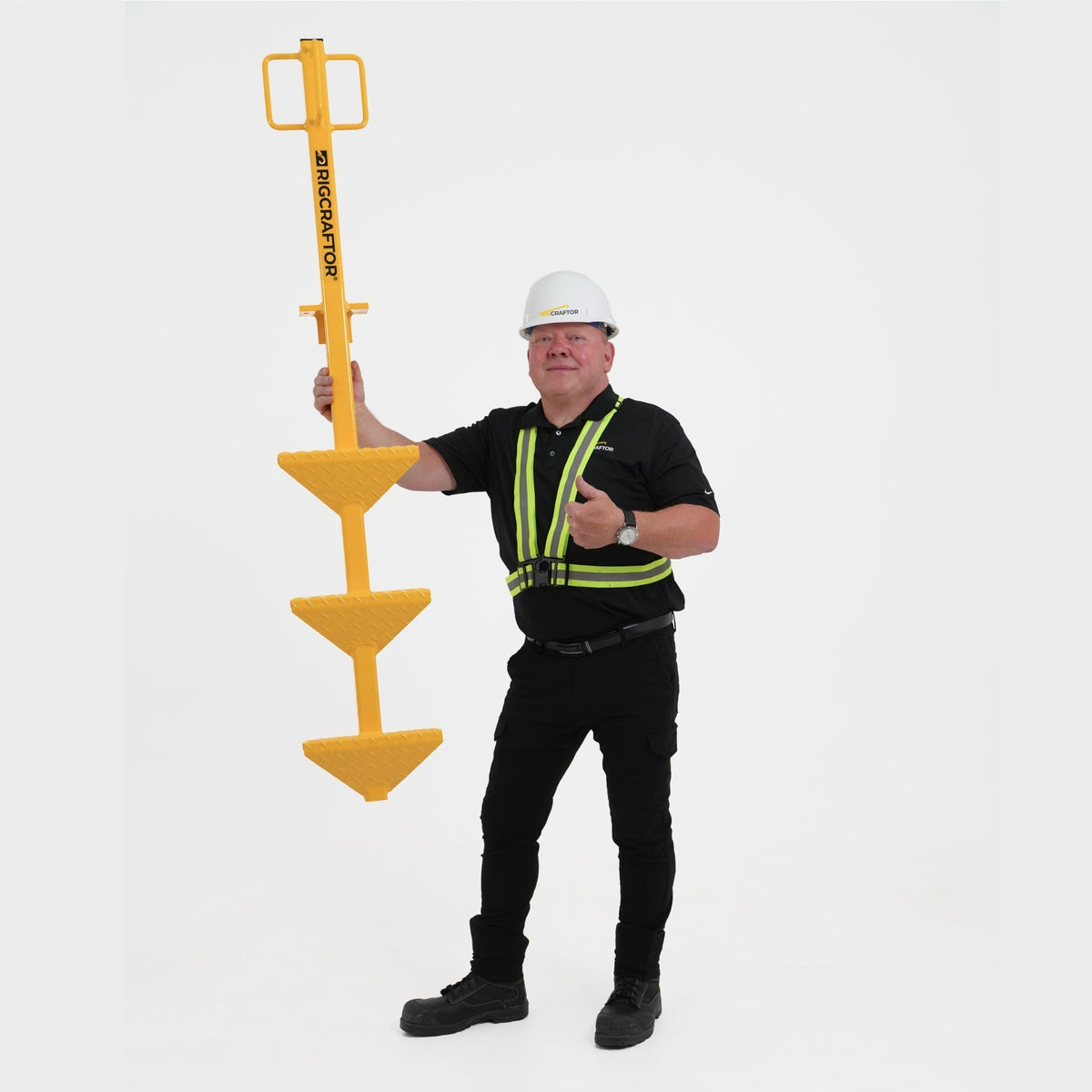
The creation of every RigCraftor product begins the same way: with a real problem shared by a client or a transportation professional. For example, the Bucket Strap Thrower was born from a specific need: how to reduce the physical effort required to position straps effectively on elevated loads.
The starting point: a repeated constraint
In flatbed and enclosed trailer operations, climbing on and off the deck is part of the daily routine. In reality, access frequently involves stepping onto tires, axles, or bumpers, or using small built-in steps that lack proper ergonomics. Rain, mud, ice, or dust make these surfaces slippery. Over time, repeated climbs and descents, sometimes 20 to 30 times per day, place significant stress on the knees, ankles, and lower back. It was this normalization of risk that served as the starting point.
The challenge to solve
The issue was not access itself. The issue was the lack of stable support points and proper ergonomics. Field observations identified several constraints:
-
Variable trailer heights;
-
Lack of three points of contact;
-
Slippery surfaces in winter conditions;
-
Repeated jumping leading to microtrauma.
The goal was not to complicate the operation, but to create simple, fast, and safe access adapted to the realities of transportation work.
The first prototypes
The first version of the Trucker’s Step aimed to answer a simple question: How can we design a straightforward ladder that is easy to deploy and compatible with different types of trailers?
The early prototypes tested:
-
Step width;
-
Support angle;
-
Mounting method;
-
Load resistance.
Some versions lacked stability. Others added too much weight or complicated installation. As is often the case in product development, the first working model revealed its limitations once exposed to real-world conditions.
The optimization phase
Once the concept was validated, the optimization phase began.
Priorities included:
-
Ensuring maximum lateral stability;
-
Guaranteeing effective anti-slip surfaces;
-
Allowing quick installation;
-
Providing compatibility with various trailer formats.
Testing was conducted in real-world conditions: rain, snow, and uneven ground.
User feedback led to adjustments in:
-
The anchoring system;
-
Structural rigidity;
-
Step height;
-
Handrail ergonomics (depending on the model).
The objective was clear: eliminate improvisation.
Industry validation
An access device must inspire confidence from the very first use.
Validation focused on:
-
Load capacity;
-
Stability under movement;
-
Material durability;
-
Resistance to wear.
The Trucker’s Step had to withstand intensive use without loss of stability.
Testing confirmed that structured access reduces jumping, improves balance, and decreases mechanical stress on joints.
The Final Product
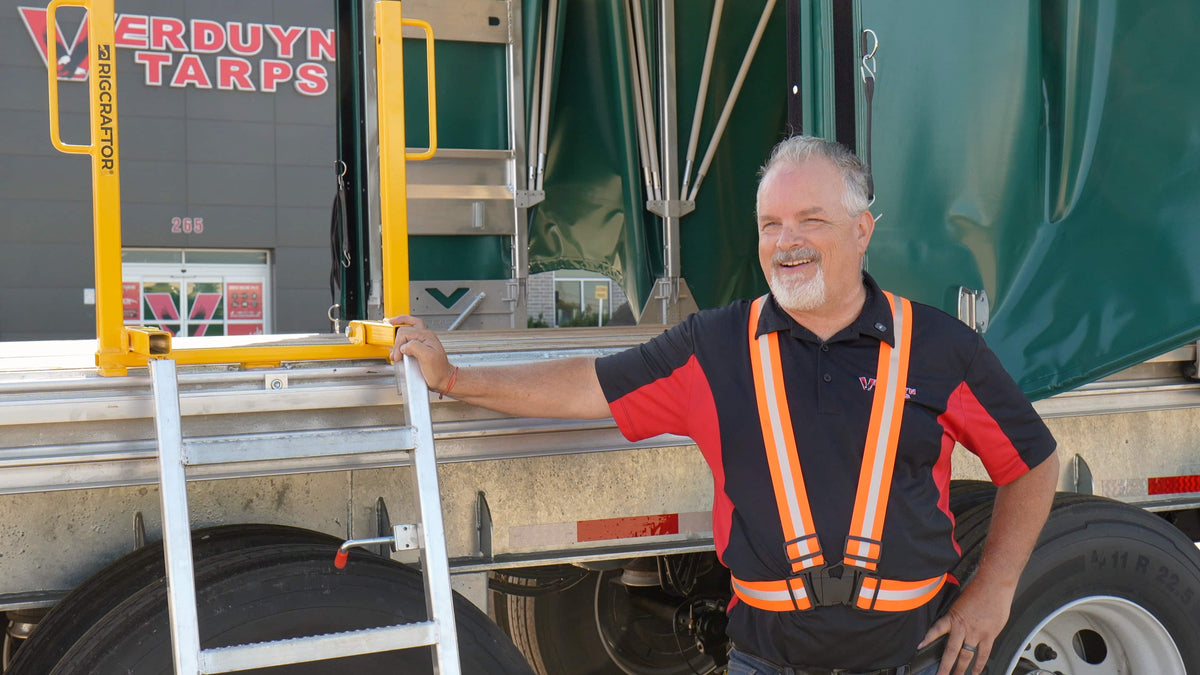
The RigCraftor Trucker’s Step meets four operational objectives: providing stable, trailer-anchored access; ensuring safety through three points of contact; offering vertical access that avoids torsional strain; and featuring anti-slip steps.
It is not an accessory, it is a response to a normalized risk.
A Continuous Process
Product development does not end at launch. User feedback, evolving operational realities, and changing industry practices continuously inform our thinking.
Innovation is not a one-time event; it is an ongoing process of improvement.
→ See the Trucker’s Step in action


Share: